
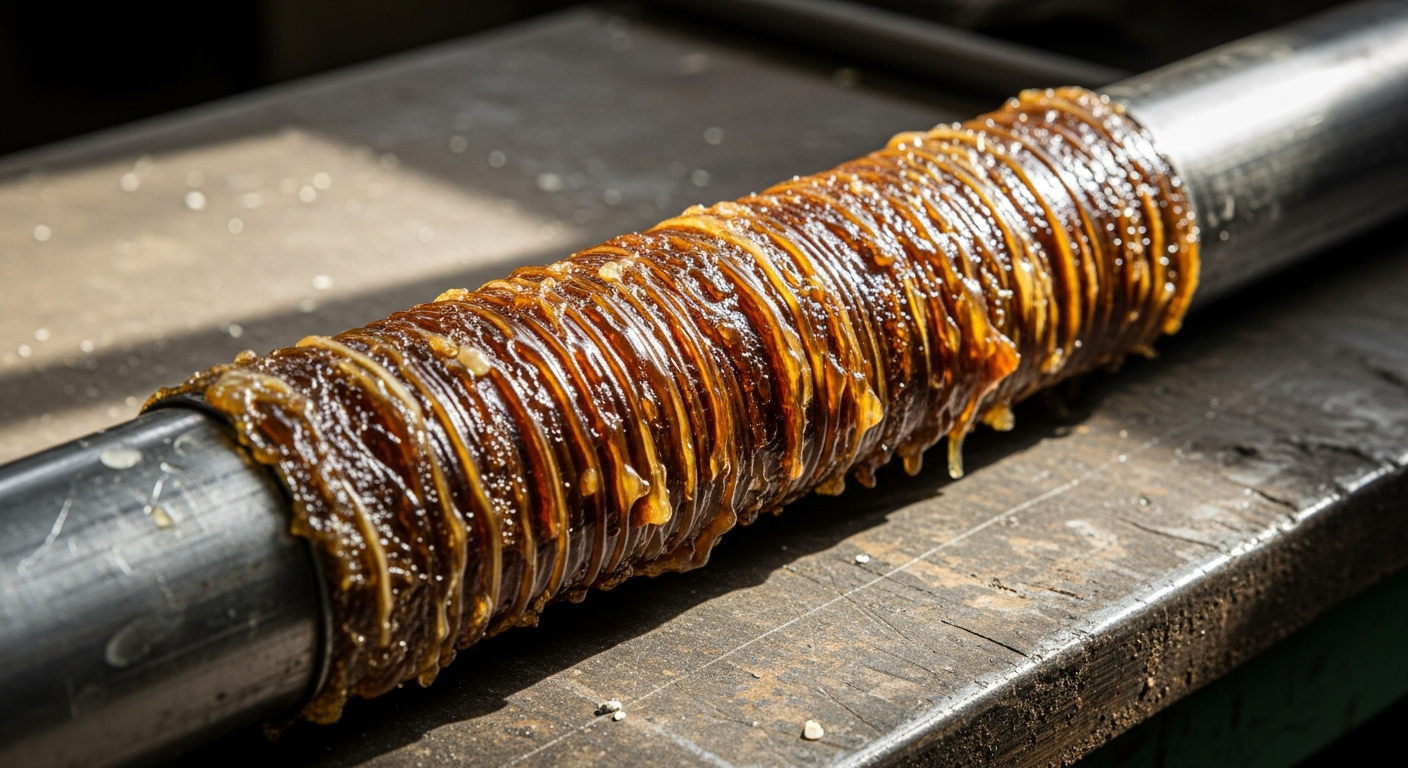
Paraffin, scale, and solids are the three depositional failure modes that quietly destroy rod-pumped well economics. Each works differently and each has a distinct fix, but all three respond better to an integrated program than to reactive point treatments. Getting the combined approach right extends run life more than any of them alone.
The Three Problems
Paraffin (wax) deposits when temperature drops below the cloud point. It builds up in tubing, on rods, inside the pump, and in flowlines. Restriction of flow, friction increase, and eventual plugging. Temperature and crude composition drive it.
Scale forms when water chemistry shifts. Calcite, gypsum, and barite are the common types. Pressure drops, temperature changes, or mixing incompatible waters trigger precipitation. Plugs perforations, pump intakes, valves, tubing. Chemistry of produced water drives it.
Solids - sand, proppant, formation fines, scale fragments - cause abrasion and sticking. Valves hang up. Plunger-barrel clearance opens. Pump intake packs off. Worsens both paraffin and scale problems by providing nucleation sites and restricted flow.
Prevention Before Treatment
Keep the fluid warm. Insulated tubing, chemical pourpoint depressants, and hot oiling programs all work against paraffin. Inject scale inhibitor continuously in squeeze programs or batch treatments matched to water chemistry. Manage solids through proper completions, screen placement, and downhole sand separators on problematic wells. Prevention is always cheaper than mechanical removal.
Mechanical Removal
Wireline cutting, paraffin knives, hot oiling, and chemical solvents each have a role. Pull-and-clean is the last resort because it is the most expensive. A schedule of routine mechanical interventions based on measured buildup rate beats waiting for a failure.
Chemical Treatment Programs
Continuous injection is usually cheaper per well than batch treatments when the problem is ongoing. Chemical selection matters - the wrong scale inhibitor for your water chemistry is no inhibitor at all. Run chemistry analysis, select product accordingly, monitor results. Chemicals are easy to throw at the problem and waste if the selection is not grounded in data.
Equipment Selection
Pumps designed for sandy service have different clearances and valve designs. Corrosion-resistant metallurgy for scale-prone water. Tubing coatings that resist paraffin adhesion. The right equipment does not eliminate the problem but makes every other line of defense more effective.
Monitoring
Production decline patterns hint at deposition problems before the pump quits. Pressure surveys, dynamometer trends, and periodic inspections catch buildup early when treatment is cheap. Pull samples when you do pull the pump - know what deposited, so the next treatment program can actually target it.
Bottom Line
Paraffin, scale, and solids are three different failure mechanisms that require different tools. An integrated program runs prevention continuously, mechanical removal on schedule, and chemical treatment matched to measured chemistry, then monitors results and adjusts. Reactive point treatment is always more expensive than disciplined prevention.