
Surface equipment maintenance is underrated in engineering discussions and overrated on inspection checklists. Some maintenance tasks protect run life directly. Others are busywork that gets done because it is on the schedule. Prioritizing correctly extends equipment life and saves labor.
The Tasks That Actually Matter
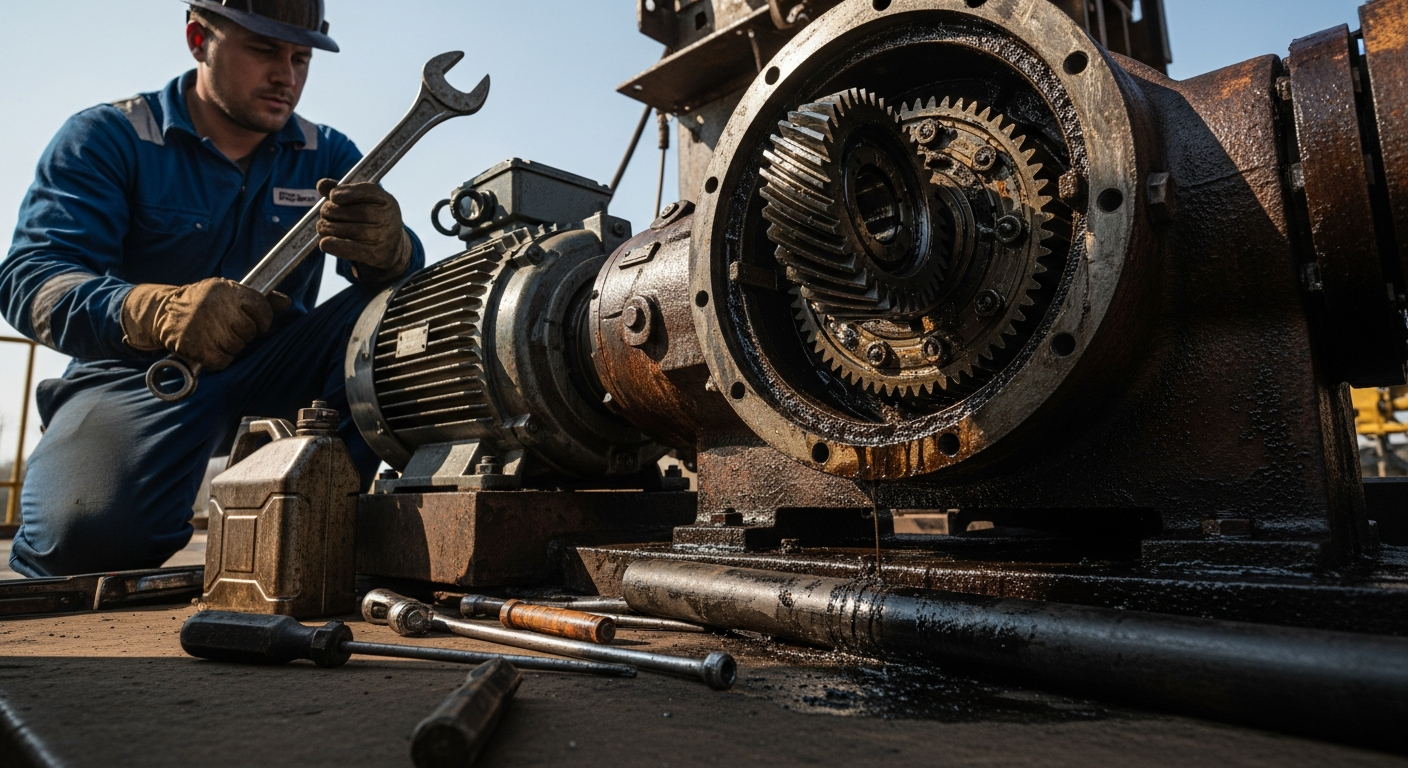
Gearbox oil condition. Sampled and analyzed periodically. Metals in the oil indicate wear on specific bearings. Contamination (water, abrasives) predicts future failure. Replacing oil on schedule based on condition, not calendar, extends gearbox life meaningfully.
Bearing lubrication. Pitman arm bearings, crank arm bearings, walking beam bearings. Under-lubricated bearings fail and shut down the unit. Over-lubrication creates its own problems (ejected seals, contamination) but is less common. A grease schedule and the right grease for the service condition.
Belt tension and alignment. Belts running too loose slip, too tight damage bearings. Misaligned sheaves destroy belts within weeks. A belt tension gauge and a straightedge check take 15 minutes per unit and prevent a lot of failures.
Counterbalance verification. Checked at any operational change and periodically otherwise. Covered in detail separately - balancing is cheap energy savings and wear prevention.
Polished rod clamp torque. Loose clamps slip and damage the polished rod. Over-torqued clamps damage the rod too. Correct torque per spec, inspected on a schedule.
The Tasks That Get Too Much Attention
Painting. Keeps the unit looking good. Does nothing for run life. Do it when corrosion is visible, not on a calendar.
Torque checks on bolts that are not subject to cyclic loading. Inspect visually and tighten when you find one loose.
Stroke length verification on a properly installed unit. Unless something has changed, the stroke length is what it was at installation.
What Catches Problems Before They Fail
Vibration analysis. Changes in vibration signature indicate bearing degradation, misalignment, or imbalance before any of them become failures. Cheap to set up, easy to track.
Current monitoring. Motor current waveform over a cycle tells you about counterbalance, load, and mechanical efficiency all at once. Baseline it and watch for drift.
Walk-around inspection. The simplest but underrated - an experienced eye on the unit once a month catches leaks, cracks, fastener issues that no sensor detects yet.
Bottom Line
Effective surface maintenance concentrates on the handful of tasks that drive actual equipment life - gearbox condition, bearing lubrication, belt alignment, counterbalance, vibration. Everything else is secondary. A program that does the essential tasks well and skips the busywork saves labor without reducing reliability.